Skin health is an important aspect of overall well-being, physical comfort, and self-confidence. At Saaroopya Homeo Clinic, we provide individualised homeopathic consultations for concerns such as acne, psoriasis, eczema, hair fall, and recurring skin complaints. Our approach involves understanding individual symptoms, medical history, skin characteristics, and possible contributing factors while encouraging appropriate dermatological evaluation, diagnostic assessment, and evidence-based medical care.
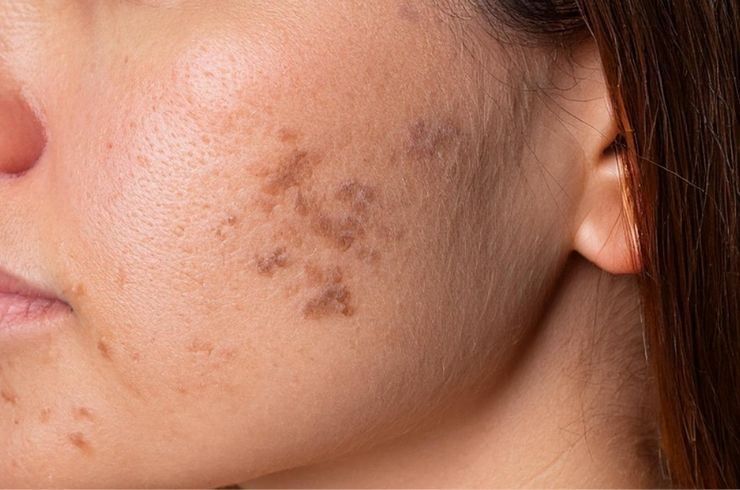
Acne vulgaris is a common inflammatory disorder involving the pilosebaceous units, which comprise hair follicles and sebaceous glands. It commonly affects the face, chest, shoulders, and back, where sebaceous glands are more active. Depending on its severity, acne may cause different types of lesions and, in some cases, permanent scarring.
Common presentations include:
Comedonal Acne: Open comedones (blackheads) and closed comedones (whiteheads).
Papular Acne: Small, raised, inflamed bumps on the skin.
Pustular Acne: Inflamed lesions containing pus.
Nodulocystic Acne: Deeper, painful nodules and cyst-like lesions that may cause scarring.
Assessment considers the distribution, severity, duration, recurrence, hormonal influences, skincare practices, and possible scarring.
Urticaria, commonly known as hives, is a skin reaction characterised by raised, itchy wheals that may appear suddenly and change in size, shape, or location. Individual lesions often disappear within 24 hours, although new ones may develop. The condition may be acute or chronic, depending on its duration and recurrence.
Common types include:
Acute Urticaria: Episodes lasting up to six weeks.
Chronic Spontaneous Urticaria: Recurrent wheals occurring for more than six weeks without an identifiable external trigger.
Inducible Urticaria: Reactions triggered by factors such as pressure, heat, cold, sunlight, or exercise.
Angioedema: Deeper swelling that may affect the lips, eyelids, face, or other tissues.
Possible triggers include infections, medications, foods, insect stings, and physical stimuli. Assessment includes identifying potential triggers and checking for associated symptoms.
Psoriasis is a chronic, immune-mediated inflammatory skin disorder characterised by accelerated skin-cell turnover. It commonly produces well-defined, red or inflamed plaques covered with silvery-white scales. The condition may involve different body regions and can fluctuate between periods of improvement and flare-ups.
Common types include:
Plaque Psoriasis: Raised, scaly patches commonly affecting the elbows, knees, scalp, and lower back.
Guttate Psoriasis: Small, drop-shaped lesions that may develop following certain infections.
Inverse Psoriasis: Smooth, inflamed patches occurring in skin folds.
Pustular Psoriasis: Pustules developing over inflamed skin.
Nail Psoriasis: Pitting, thickening, discolouration, or separation of the nails.
Psoriasis may also be associated with psoriatic arthritis, causing joint pain, stiffness, and swelling. Assessment considers skin involvement, flare-up patterns, nail changes, and possible joint symptoms.
Hair fall or alopecia refers to excessive hair shedding, reduced hair density, or partial or complete hair loss. It may develop gradually or suddenly and can affect the scalp or other body areas. Identifying the pattern, duration, and possible underlying causes is important for appropriate evaluation.
Common types and patterns include:
Androgenetic Alopecia: Hereditary pattern hair loss associated with genetic and hormonal influences.
Telogen Effluvium: Increased hair shedding following illness, stress, nutritional deficiencies, or hormonal changes.
Alopecia Areata: An autoimmune condition causing patchy hair loss.
Traction Alopecia: Hair loss associated with repeated pulling or tension on the hair.
Scarring Alopecia: Hair loss involving damage to hair follicles and possible permanent hair loss.
Other contributing factors may include thyroid disorders, iron or other nutritional deficiencies, medications, scalp infections, and hormonal changes. Evaluation may involve scalp examination, blood investigations, and dermatological assessment.
Eczema and dermatitis refer to inflammatory skin conditions that may cause redness (erythema), itching (pruritus), dryness, scaling, and irritation. Symptoms may vary from mild, temporary irritation to persistent inflammation with skin thickening or cracking. The distribution and appearance of the rash can help identify its possible cause.
Common types include:
Atopic Dermatitis: A chronic, relapsing condition commonly associated with dry, itchy, inflamed skin.
Contact Dermatitis: Skin inflammation caused by exposure to irritants or allergens.
Seborrhoeic Dermatitis: A condition affecting oil-rich areas such as the scalp, eyebrows, and sides of the nose.
Nummular Eczema: Coin-shaped, itchy patches of inflamed skin.
Dyshidrotic Eczema: Small, itchy blisters commonly affecting the palms, fingers, and soles.
Assessment considers symptom duration, affected areas, environmental exposures, allergies, skincare products, and possible secondary infections.
Warts, medically known as verrucae, are non-cancerous skin growths caused by certain strains of the human papillomavirus (HPV). They may appear as rough, raised, or smooth growths on different body areas. Although many warts are harmless, some may cause discomfort, particularly when located on the soles or other pressure-bearing surfaces.
Common types include:
Common Warts (Verruca Vulgaris): Rough, raised growths commonly appearing on the hands and fingers.
Plantar Warts (Verruca Plantaris): Growths on the soles of the feet that may cause pain while walking.
Flat Warts (Verruca Plana): Small, smooth lesions that may occur in clusters.
Filiform Warts: Narrow, elongated growths commonly found around the face and neck.
Periungual Warts: Growths developing around or beneath the fingernails and toenails.
Clinical assessment considers the appearance, location, number, duration, and possible spread of the lesions.
Lichen planus is an inflammatory condition that may affect the skin, scalp, nails, and mucous membranes. It commonly presents as itchy, flat-topped, polygonal, purplish papules. Its appearance and symptoms vary depending on the affected area, and some forms may cause persistent discomfort or changes in pigmentation.
Common presentations include:
Cutaneous Lichen Planus: Itchy, purplish papules commonly affecting the wrists, ankles, and lower back.
Oral Lichen Planus: White, lace-like markings or painful erosions inside the mouth.
Scalp Lichen Planus (Lichen Planopilaris): Inflammation around hair follicles that may result in scarring hair loss.
Nail Lichen Planus: Nail thinning, ridging, splitting, or damage to the nail plate.
Genital Lichen Planus: Inflammatory lesions affecting genital mucous membranes or surrounding skin.
Assessment considers the affected sites, lesion characteristics, itching, pain, and possible scarring. Dermatological examination and, when indicated, a skin biopsy may help confirm the diagnosis.
Ringworm, medically known as tinea, is a contagious fungal infection affecting the skin, scalp, feet, or groin. Despite its name, it is not caused by a worm. It commonly appears as circular or ring-shaped patches with raised, scaly borders and sometimes clearer central areas. Itching and gradual spreading may occur without appropriate treatment.
Common types include:
Tinea Corporis: Fungal infection affecting the body.
Tinea Capitis: Infection of the scalp, sometimes causing scaling and patchy hair loss.
Tinea Pedis: Athlete’s foot, affecting the spaces between the toes and soles.
Tinea Cruris: Jock itch, involving the groin and inner thighs.
Tinea Faciei: Fungal infection affecting the face.
Tinea Manuum: Infection involving the hands and palms.
Assessment considers lesion appearance, affected areas, exposure history, and possible recurrence. Skin scrapings and fungal microscopy or culture may be recommended for confirmation.
Herpes simplex infection is a viral condition caused by herpes simplex virus type 1 (HSV-1) or type 2 (HSV-2). It may produce clusters of painful or tingling, fluid-filled blisters around the mouth, genital region, or other affected areas. Following the initial infection, the virus remains dormant in nerve cells and may reactivate periodically.
Common presentations include:
Oral Herpes: Blisters or cold sores around the lips and mouth, commonly associated with HSV-1.
Genital Herpes: Painful blisters, ulcers, or sores around the genital or anal region, associated with HSV-1 or HSV-2.
Recurrent Herpes: Repeated outbreaks that may be preceded by tingling, burning, or itching.
Herpetic Whitlow: A painful herpes infection affecting the fingers.
Symptoms may include localised pain, itching, burning, swollen lymph nodes, and flu-like symptoms during an initial episode. Clinical assessment and appropriate testing help distinguish herpes from other skin conditions. Antiviral medication may be required to manage outbreaks and reduce transmission risk.
Fungal infections, collectively known as mycoses, occur when fungi affect the skin, scalp, nails, or mucous membranes. They may develop in warm, moist areas of the body and can spread through direct contact, contaminated surfaces, or shared personal items. Symptoms vary according to the fungal organism and affected body region.
Common types include:
Dermatophytosis: Fungal infections affecting the skin, hair, and nails.
Candidiasis: Infection caused by Candida species, commonly affecting skin folds and mucous membranes.
Onychomycosis: Fungal nail infection causing thickening, discolouration, brittleness, or nail separation.
Intertrigo with Fungal Infection: Inflammation and fungal overgrowth in moist skin folds.
Pityriasis Versicolor: A superficial yeast-associated skin condition causing lighter or darker patches.
Common symptoms include itching, redness, scaling, cracking, peeling, and changes in nail colour or texture. Clinical examination and, when necessary, fungal microscopy or culture help identify the infection and guide appropriate antifungal treatment.
At Saaroopya Homeo Clinic, we recognise that skin concerns require careful assessment and individual attention. Our doctors prioritise understanding symptoms, medical history, and possible contributing factors through detailed consultations. We emphasise compassionate communication, patient education, and appropriate dermatological referrals to help individuals make informed decisions about their skin health.
Book your consultation today and take the next step toward better health.